Approval should connect a pack sample to the production decision
For an EU-bound tea program, a supplier declaration is an important input, but it is not the same thing as a production-release decision. The commercial question is more specific: does the pouch, sachet, liner or paper component that will actually run on the packing line match the evidence reviewed by the buyer? A short verification plan helps a wholesale tea buyer connect the material specification, the representative sample, any requested laboratory work and the final release record.
This is particularly relevant after the EU Packaging and Packaging Waste Regulation (PPWR) began applying its PFAS food-contact packaging restrictions on 12 August 2026. The Commission guidance describes concentration thresholds and a stepwise approach for enforcement, while noting that there is no EU-harmonised testing methodology for every food-contact packaging matrix. That is a reason to define the question a test is meant to answer before ordering one—not a reason to assume that a generic “PFAS-free” statement settles every buyer requirement.
Start with the release question, not the laboratory name
Before requesting samples, write one sentence that describes the decision. For example: “Approve the printed stand-up pouch and direct-contact inner layer for this tea SKU, this destination market and this planned production window.” That sentence prevents the team from testing an attractive prototype while the factory later uses a different laminate, coating, adhesive, ink set or sachet paper.
A workable buyer brief identifies the food-contact component, the finished pack format, the tea product, the destination, the planned use conditions and the decision owner. It should also state whether the evidence is intended to support supplier qualification, artwork release, pilot production or repeat-order change control. These are different decisions and may warrant different evidence.
Build a representative sample set
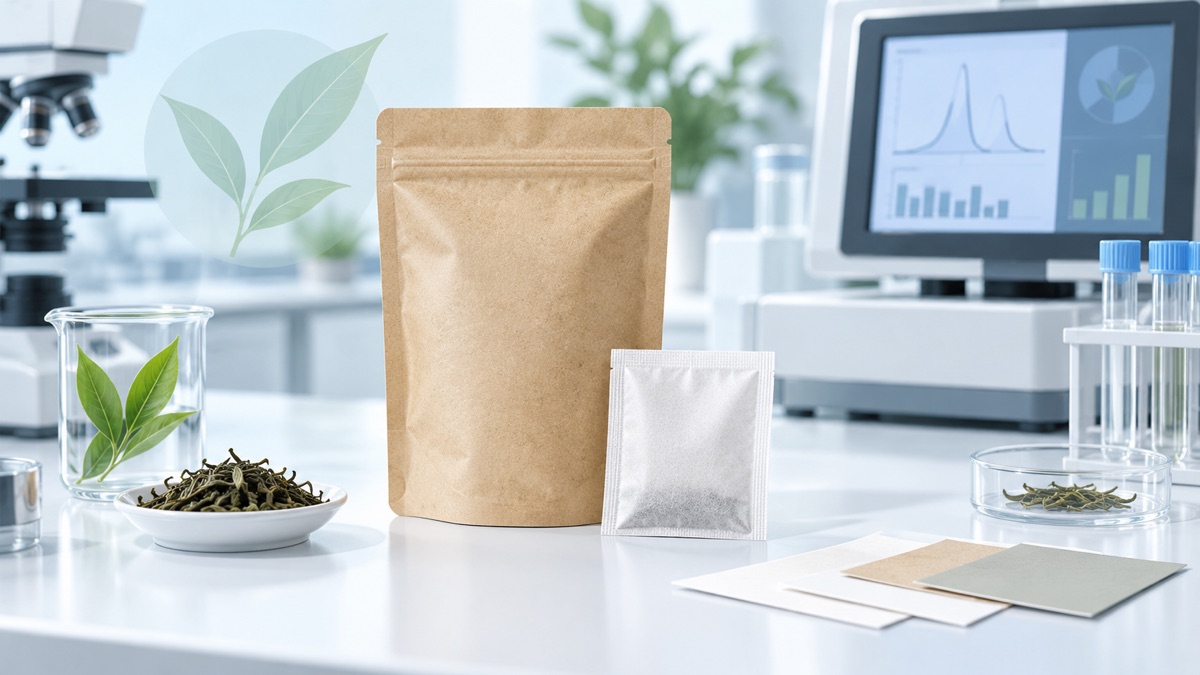
Packaging is a system rather than a single material. A tea pouch can include an outer print layer, a barrier layer, sealant, adhesive, zipper and valve; a tea bag can include the contact web, thread, tag and an outer overwrap. The sample set should therefore be tied to the bill of materials and revision level. Ask the supplier to identify what each sample represents and whether it was made with production-intent inputs.
For a private label tea project, retain one unopened reference sample with the approved artwork and component code. Photograph the pack externally, record the sample receipt date and keep the supplier’s revision reference with the file. This modest discipline is useful even when no laboratory test is requested: it makes a later substitution visible.
Choose testing that fits the risk question
Testing is not a universal pass/fail sticker. The European Commission’s 2026 guidance describes an enforcement sequence beginning with total fluorine, then additional analysis when needed, and targeted PFAS analysis for the stated concentration limits. Buyers should not turn that public enforcement guidance into a private promise that every laboratory or every destination uses identical methods. Instead, the RFQ to a qualified laboratory should name the component, matrix, intended market, analytical objective, reporting units and the decision that will be taken from the result.
AOAC’s SMPR 2025.001 is useful context because it sets voluntary method-performance expectations for PFAS analysis in food-packaging matrices, including procedural blanks and reference materials or matrix spikes. It does not certify a particular tea pouch. A buyer can use it to ask better questions: Which analytes are reported? What is the limit of quantitation? Which matrix was validated? Were blanks and relevant controls included? Can the laboratory explain whether the submitted construction matches the method’s scope?
If a pack is intended for another market, use that market’s applicable requirements and customer specification as the primary release basis. The US FDA’s 2025 update on certain grease-proofing substances in paper and paperboard packaging is a separate regulatory context; it should not be presented as proof of EU compliance.
Run a four-gate verification plan
- Specification gate. Freeze the component list, substrate description, material thickness where applicable, print/coating reference, intended contact role and destination. Resolve vague terms such as “eco paper” or “food-grade film” before sampling.
- Evidence gate. Match supplier declarations, food-contact documentation and any test reports to the component code and revision. Record gaps as open items rather than silently accepting a document from a similar product.
- Sample gate. Confirm that the retained sample, artwork proof and proposed production sample use the same construction. For a material or supplier change, decide whether the change is minor enough for document review or needs a new sample or test request.
- Release gate. Record the approved revision, evidence reviewed, unresolved limitations, approver and expiration/review trigger. Do not release on a verbal assurance alone.
Use change triggers instead of one-time approval
The most useful verification plan tells the factory and buyer when to reopen it. Common triggers include a new substrate or coating, a different converter, revised adhesive or ink system, a format change, a new destination, a different contact role, or a supplier document that refers to an outdated component code. The right response is not always a full laboratory program. It may be a revised declaration, a sample comparison, a risk review or a fresh test quotation. What matters is that the response is deliberate and recorded.
A practical release checklist for tea buyers
- Does the sample match the pack format and component revision being purchased?
- Are destination-market requirements and customer specifications identified rather than assumed?
- Does each declaration or report name the relevant material or give a traceable cross-reference?
- If testing was requested, does the laboratory scope answer the stated release question?
- Are test limitations, reporting units and result interpretation retained with the decision?
- Is there a named trigger for re-review before repeat production?
For a B2B tea supplier and buyer, the value is not a dramatic claim about one material. It is a repeatable way to show that the packaging evidence, the physical sample and the production instruction point to the same approved item. That makes procurement conversations clearer and reduces the risk that a compliant-looking prototype becomes a poorly documented production change.
AI-assisted content disclosure: This article was drafted with AI assistance and editorially reviewed. It is general procurement information, not legal, regulatory or laboratory advice. Buyers should obtain market-specific advice and use appropriately qualified testing providers where testing is needed.