Lead
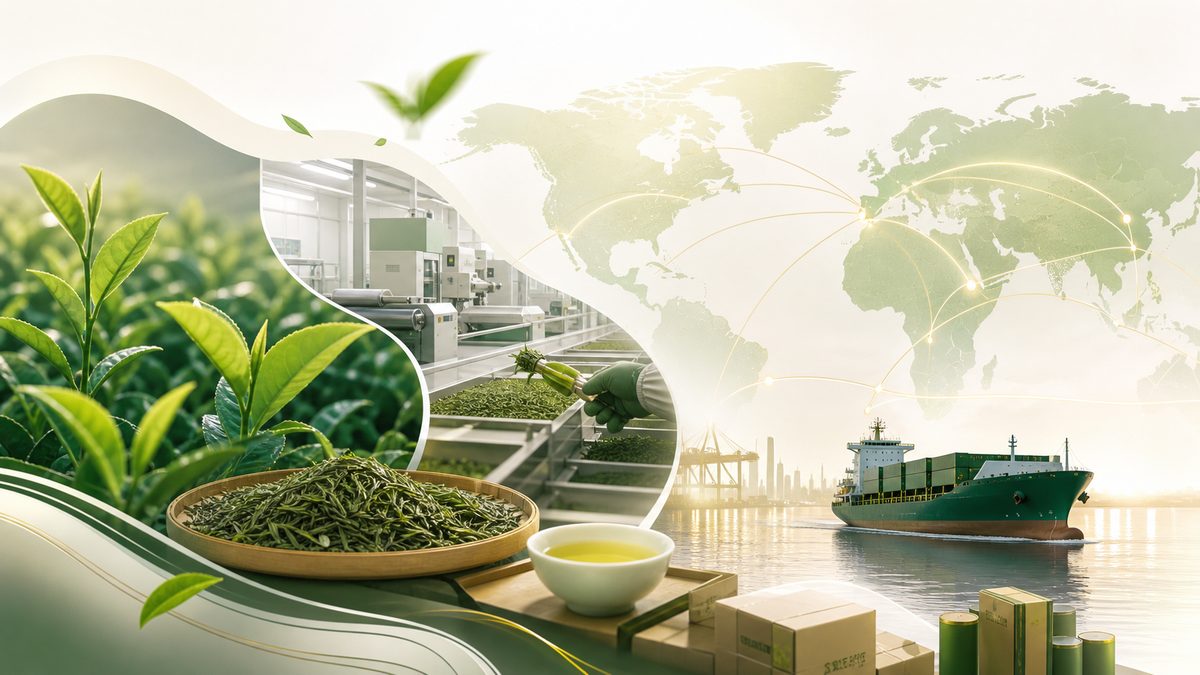
China’s tea export market is showing a more diversified growth pattern. Traditional green tea products continue to provide a stable foundation, while jasmine tea, black tea, matcha, and beverage tea bases are gaining attention from overseas beverage, bakery, dessert, and wellness brands.
Industry Background
Chinese tea has long been exported in large volumes, especially green tea. In recent years, international buyers have become more interested in product consistency, clean flavor profiles, customized grades, and formats that can be used easily in modern food and drink applications. This creates room for a Chinese scented tea factory and beverage tea base supplier that can supply both classic loose-leaf tea and application-focused tea ingredients.
Key Developments
Export-oriented tea companies are investing more in grading, blending, packaging, documentation, and product development. For scented tea suppliers, jasmine tea and gardenia-scented tea can support brands that want a distinctive floral profile. For beverage companies, concentrated tea bases and stable raw tea materials can improve efficiency in ready-to-drink products, milk tea, fruit tea, and private label tea projects.
Market Implications
For importers and wholesale tea buyers, the next opportunity is not simply buying tea at a lower price. It is finding suppliers that can provide stable quality, flexible specifications, food-safety documentation, and product ideas that match local consumer trends. A certified Sichuan tea factory such as Yiyaoxin Tea Factory can be better positioned when it combines production capacity with export service, scented tea expertise, and beverage tea base development.