
Lead
Sample evaluation is one of the highest-leverage steps in tea sourcing. A well-run comparison helps wholesale tea buyers move beyond a first impression and assess whether a Chinese tea factory can support the intended product, from a café menu to a private label tea range or bottled beverage line.
Industry Background
Tea samples are often evaluated under inconsistent conditions: one cup is brewed stronger, another is tasted after it cools, and the buyer’s final application is never tested. This can obscure the differences that matter commercially. A consistent protocol gives buyers a better basis for comparing jasmine tea, green tea, black tea and Chinese scented tea across potential suppliers.
Key Developments
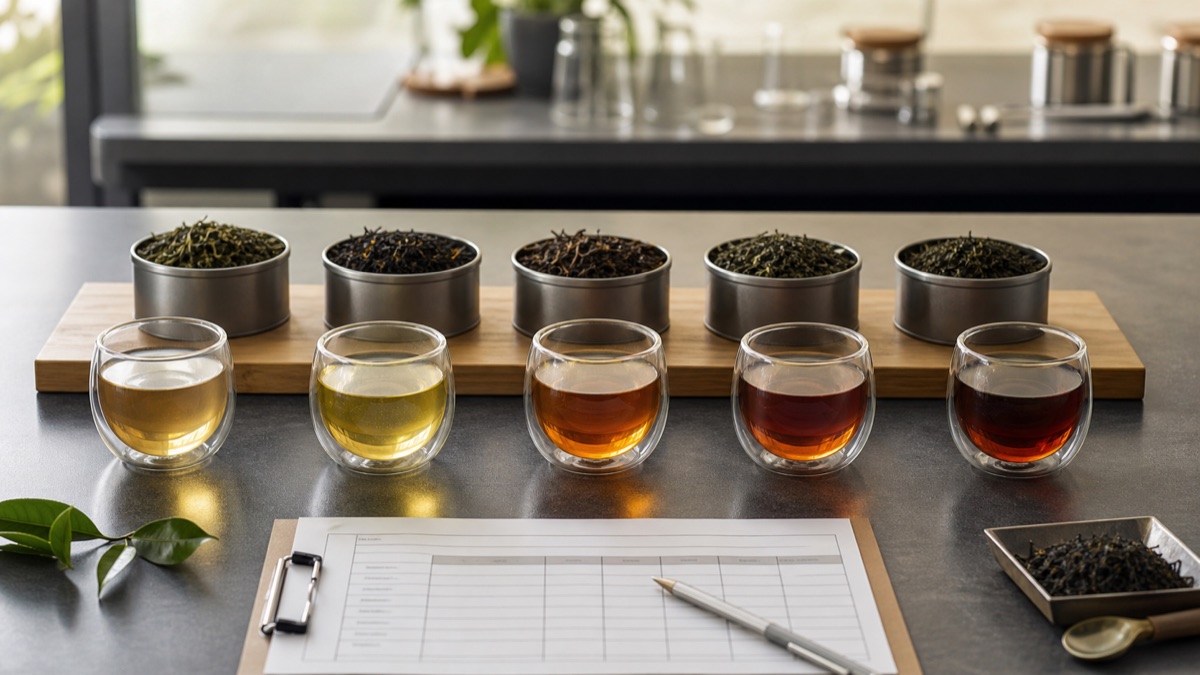
Start by confirming the commercial brief: end use, target flavor, pack format, desired price range, destination market and expected order volume. Then brew each candidate with the same water, dosage, temperature and time. Record dry-leaf appearance, aroma, liquor color, body, astringency and finish. For tea supplier for beverage company evaluations, repeat the test in the planned formula—such as milk tea, fruit tea or cold brew—because the preferred plain infusion is not always the best beverage tea base.
Yiyaoxin Tea Factory can support this process by providing clear sample labels and discussing the intended application before recommending materials. Buyers should ask for a tea specification sheet once a candidate is selected, and retain the approved sample as a shared reference. For private label tea, packaging trials and aroma protection should also be reviewed before the final purchase order.
Market Implications
A disciplined sample review makes it easier to compare a Chinese scented tea factory on the criteria that influence repeat purchasing: stable tea aroma, batch consistency, communication speed and suitability for the finished product. It also helps procurement teams explain their decision internally. For B2B tea buyers, the goal is not simply to find an attractive sample; it is to select a supplier and specification that can perform reliably in the market.