Lead: turn a caffeine question into a purchasing specification
A tea caffeine specification should tell a buyer what was measured, how the sample was prepared and which product the result represents. A number without those details can create confusion between a dry ingredient, an extracted tea base and a finished drink. For importers, beverage developers and private label teams, the practical goal is to connect supplier evidence to the product that customers will actually prepare or consume.
The first question is therefore not simply “How much caffeine is in this tea?” It is “Which material, serving and preparation does the purchasing decision concern?” This guide proposes a procurement workflow for answering that question. It does not set a universal caffeine limit, certify a product or establish the wording permitted in any destination market. Those decisions require product-specific evidence and appropriate local review.
Industry background: a tea name cannot replace product evidence
The US FDA explains that caffeine amounts and container sizes vary between specific products. It also distinguishes decaffeinated tea from caffeine-free products: removing caffeine does not necessarily remove all of it. These points matter when a buying brief uses phrases such as “light green tea,” “evening tea” or “decaf” without identifying the measurable property behind them.
Independent analytical research also supports caution about category averages. A 2025 study of tea infusions examined different brewing temperatures, times and serving forms and found that preparation affected measured caffeine in the investigated samples. An earlier study of commercial brewed teas similarly reported an effect of steeping time. These are findings about studied products and conditions, not a specification for every tea on the market. Buyers should use them as a reason to control preparation, rather than copy a published value into a supplier contract.
Key developments: define the object before the number
A useful tea caffeine specification begins by identifying the object being assessed. Loose leaves and tea-bag filling are dry materials. A brewed infusion is a liquid made under specified conditions. A concentrated tea base is an intermediate ingredient. A ready-to-drink beverage is the finished formulation. A test on one object cannot automatically describe another because the preparation, dilution and serving basis differ.
For a wholesale loose-leaf order, a dry-material result may help compare lots, while an infusion result may answer the consumer-serving question. For a beverage tea base supplier, the relevant file may need both the ingredient concentration and the finished beverage measurement. For private label tea bags, the filling weight and brewing instruction are part of the connection between a laboratory sample and the declared serving.
Record the unit and reporting basis
Before comparing quotations or certificates, place the reporting unit beside the result. Milligrams per gram of dry tea, milligrams per litre of infusion and milligrams per serving describe different bases. A percentage also needs a defined material basis. Ask whether the laboratory reports the sample as received or uses a dry-matter correction, where relevant to the method and purchasing question.
A simple arithmetic example illustrates the issue: a hypothetical finished drink measured at 100 milligrams per litre would contain 25 milligrams in a 250-millilitre portion. This calculation is only a unit conversion, not a typical tea value, a recommended serving or evidence for a label. It assumes that the measured liquid is the drink being served and that the portion volume is correct. Adding water, changing the recipe or serving a different volume requires a fresh calculation and may require further measurement.
Freeze the preparation protocol
If the decision concerns brewed tea, write a preparation protocol before sending samples. Include the tea weight, water volume, water temperature, contact time, vessel, agitation and the way leaves are separated from the liquid. Record the final liquid volume if it differs from the initial water volume. These fields are a suggested purchasing checklist, not a validated analytical method.
The protocol should reflect the decision. A consumer tea bag may be assessed against its intended preparation instructions. A foodservice concentrate may need assessment after its agreed dilution. An RTD formulation needs evidence for the finished recipe. A cold-brew project should define its own preparation conditions instead of treating a hot infusion as an interchangeable proxy.
Keep the sensory trial and caffeine trial connected but distinct. A pleasant sample cup does not establish a caffeine amount. Conversely, a caffeine result does not demonstrate aroma consistency, shelf life or microbiological suitability. The purchasing file should explain which evidence answers each question.
Build a lot-linked laboratory brief
Ask the laboratory to confirm that its method is suitable for the submitted matrix and intended reporting basis. Identify the product code, lot, sample collection date, packaging and preparation protocol. Request the method reference, reporting unit and any relevant limitations. If the result will support a sensitive specification or public statement, discuss measurement uncertainty and the way a decision near an agreed boundary will be handled.
A laboratory report should also be traceable to the sample received. A report for a development blend may not represent a later commercial blend. A supplier certificate that names only a product family may be insufficient for a batch-specific claim. Resolve mismatched codes, dates or units before accepting the evidence. Do not reinterpret a result below a reporting limit as proof that the material contains absolutely no caffeine.
Choose a repeat-order verification plan
One sample is useful evidence for that sample, but it does not establish every future lot. Buyers and suppliers should agree how repeat orders will be checked. Depending on the product and claim, the plan may combine supplier controls, periodic testing, retained samples and review after significant changes. The frequency should follow the actual purchasing risk and evidence available, rather than an invented universal schedule.
Examples of review triggers include a new blend ratio, a different ingredient source, altered tea-bag filling weight, a changed extraction process, a new dilution instruction or a new serving size. Record the trigger, responsible person and evidence needed before the revised product is approved. This gives the team a practical answer when marketing asks whether yesterday’s result can still support tomorrow’s formulation.
Separate specification approval from label approval
A procurement target and a public claim are different decisions. A buyer may use an internal range to manage manufacturing consistency. Publishing a specific amount, using a reduced-caffeine statement or describing a product as caffeine-free raises an additional question about evidence and applicable destination requirements. Have the final wording reviewed for the actual product and market.
Avoid attaching health promises to a purchasing number. This guide does not recommend caffeine intake or describe a product as suitable for children, pregnancy or people with medical conditions. FDA advice notes individual sensitivity and encourages relevant health questions to be discussed with a healthcare professional. A supplier’s analytical result cannot establish suitability for every consumer.
Market implications: compare evidence packages, not isolated figures
When comparing a Chinese tea supplier with other sourcing options, use a common brief so that differences in evidence are visible. Ask each supplier for the same product description, lot reference, unit, preparation basis and proposed verification approach. Record whether a figure is a measured result, a historical range, an estimate or a development target. This is more informative than selecting the smallest number from documents prepared on different bases.
A practical approval file should contain the product specification, sample reference, preparation protocol where applicable, laboratory report, serving calculation and review record. It should identify open questions and the person responsible for resolving them. Commercial discussions can then focus on whether the supplier can consistently provide the required product and evidence, without implying unverified certification or capability.
Buyer checklist and planned supporting topics
- Identify the dry tea, infusion, concentrate or finished drink being assessed.
- Record units, material basis and serving volume.
- Agree preparation conditions before comparing samples.
- Link the report to the product and lot.
- Keep estimates and measured results visibly separate.
- Define review triggers for changes and repeat orders.
- Review public wording for the destination market.
This week’s supporting topics address two implementation questions. The first is now available:
- Tea Infusion Test Brief: How Buyers Make Caffeine Results Comparable — a buyer checklist for defining comparable infusion tests before results are compared.
- Tea Lot Change Control: When Buyers Need a New Caffeine Test — a buyer framework for deciding when a lot, pack or preparation change needs new caffeine evidence.
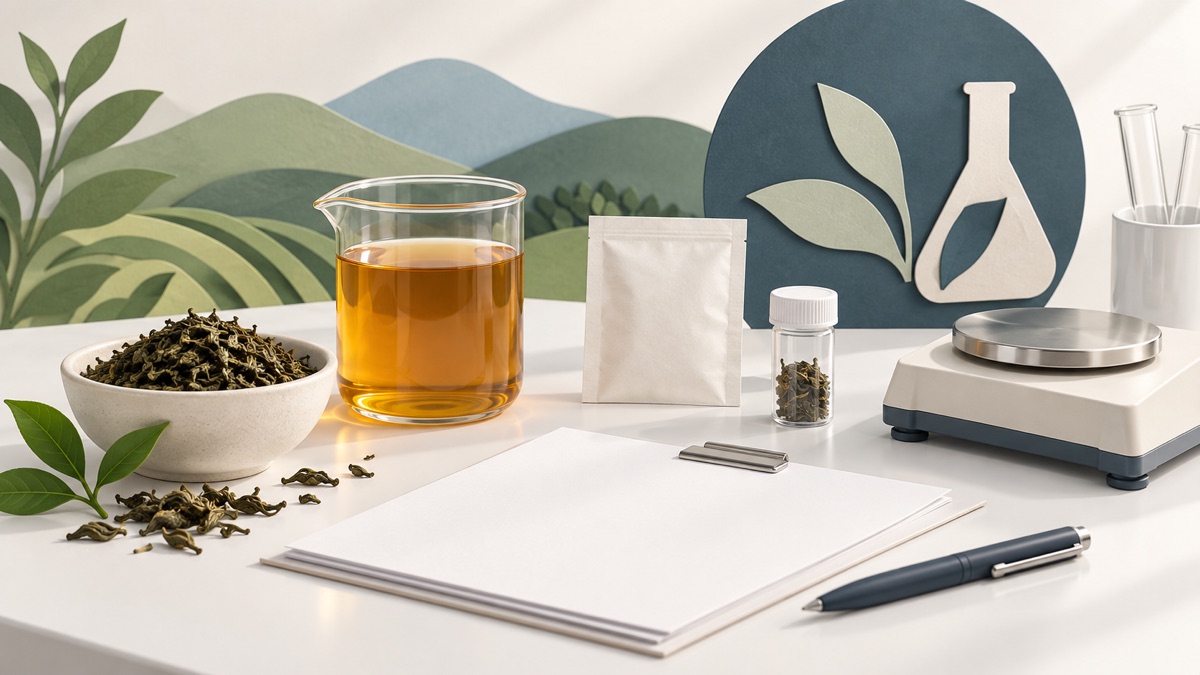
AI-assisted content disclosure: This article was prepared with AI assistance and editorial review. The accompanying image is an AI-generated editorial illustration. Procurement checklists are editorial recommendations; regulatory wording and analytical decisions require product-specific professional review.