This week’s related guide: Tea Foreign Material Detection Validation: A Buyer’s Evidence Pack for Bulk Tea — a record-by-record checklist for matching an inspection control to a bulk-tea lot.
When a bulk tea sample looks clean, it is tempting to treat that first visual impression as a release decision. For an importer, distributor, beverage brand, or private-label team, it is only the beginning. A useful foreign-material control plan connects the product specification to the points where material can enter, be detected, be separated, placed on hold, or traced back to a defined lot. That is a more dependable way to buy tea than asking a supplier to make a broad “foreign-object-free” promise.
Primary keyword: tea foreign material control. This buyer’s framework is designed for dry loose-leaf tea, tea cuts, blends and similar bulk formats. It does not set a universal acceptance limit, replace a buyer’s legal obligations, or prove the suitability of a specific lot. It helps purchasing and quality teams write a clear, testable brief before production and release.
Why a tea foreign-material specification needs more than a visual sample
Physical hazards can include stones, glass and metal fragments. Their relevance depends on the finished food, intended use, processing, packaging and consumer. U.S. food-preventive-control rules require a hazard analysis to consider foreseeable physical hazards and to evaluate factors such as raw materials, equipment, transport, processing, storage, distribution and intended use. That is a helpful structure for a tea buyer even when the buyer is not using a U.S. regulatory programme.
The practical consequence is simple: one generic certificate cannot answer every physical-control question. A whole-leaf tea packed in a retail tin, a finely cut tea blend intended for a bagging line, and a tea ingredient that a customer will mill or extract have different routes, equipment interfaces and downstream checks. A purchase specification should state which product is being assessed, what happens after receipt, and which evidence is required before the lot is released.
FDA guidance on hard or sharp foreign objects also illustrates why buyers should avoid treating one number as a universal tea specification. Its policy discusses object size together with the food’s preparation and expected consumer use. In other words, context matters. A buyer should agree a product-specific acceptance rule with the supplier and, where needed, the downstream packer or food-safety professional—not copy a regulatory enforcement criterion into an RFQ without analysis.
Start with a hazard map, not with a detector
The most useful first document is a one-page hazard map. It lists potential entry points and the control or evidence expected at each one. It is not a claim that every hazard is present; it is a structured way to decide what must be checked.
- Field and primary processing: identify how leaves are received, handled and separated from incidental material such as stones, twigs or field debris. Ask what inspection, cleaning and lot identification take place before blending.
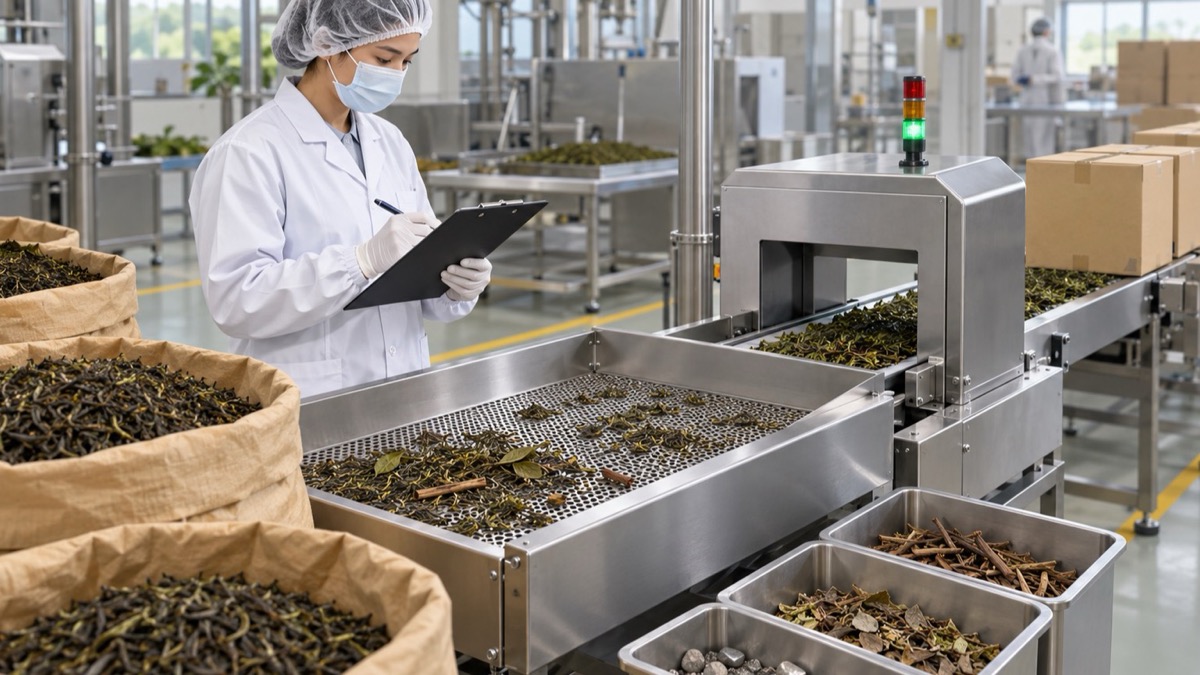
- Processing equipment: identify equipment surfaces, cutting or blending steps, screens, magnets, metal detection or other controls that are actually used. Ask how damaged or missing components are escalated.
- Blending and additions: for flavoured or blended teas, map every incoming component, including botanicals and pieces. The buyer should know whether the same supplier control applies to each component or whether separate evidence is needed.
- Packing: map risks from packaging materials, broken glass, maintenance activity and line changeovers. Record whether the final packer performs a final check and what lot identifier follows the product.
- Warehousing and transport: identify the seal, pallet, liner, container and receiving checks used to preserve the released condition. A clean factory record does not by itself prove the condition at receipt.
This map makes a buyer’s request proportionate. It also prevents a common mistake: selecting a control because it sounds advanced, then discovering it does not address the material or process actually under review. Research on non-destructive foreign-matter detection notes both the potential of imaging systems and practical constraints such as equipment cost, deployment conditions and data limitations. Technology can support a programme, but it is not a substitute for a defined hazard, a validated operating use and a response when a check fails.
Write the RFQ around evidence, scope and decision rights
A strong tea quality control RFQ does not ask only, “Do you have metal detection?” It requests the information that lets the buyer decide whether the control applies to the ordered tea. The following fields are a useful baseline.
- Product scope: tea type, grade or cut, blend constituents, pack format, intended downstream use and the exact lot definition.
- Hazard scope: the material categories covered by the supplier’s programme. Do not assume that a control aimed at ferrous metal, for example, demonstrates control of glass, stones or non-metallic debris.
- Control point: the step where each check occurs, whether it is before or after blending and packing, and whether it applies to every production run or a defined sample plan.
- Operating evidence: the record type, date, lot reference, operator verification or review method, and the retention period the supplier can provide.
- Exception procedure: the hold boundary, investigation owner, disposition authority and notification window when a check fails or equipment is damaged.
- Change control: the changes that require notice before shipment—for example a new blending line, different cleaning screen, revised packaging route, new co-packer or altered downstream process.
These fields turn vague quality language into an auditable supplier approval conversation. They are also useful where an importer asks for a certificate. Instead of accepting a standalone document, the buyer can match the certificate’s issue date, named product, lot, facility and scope to the shipment being released.
Match checks to the tea format and the downstream process
There is no single “best” tea inspection method. A sensible buyer compares the control to the product, its flow characteristics and the product’s next step. Whole-leaf material may need a different screen or visual sorting approach from a fine-cut blend. A tea supplied for extraction may have a different downstream process from a finished retail tea. The buyer’s role is not to prescribe unverified machinery. It is to ask the supplier to show how its stated control relates to the agreed product and intended use.
That comparison should include the limits of each method. A magnet, metal detector, screen, visual inspection and imaging system are not interchangeable. A supplier may use more than one layer; the buyer should document what each layer is expected to identify, where it is positioned, and what it demonstrably does not cover. The right outcome is a clear control rationale, not a longer equipment list.
At intake, a buyer can add a practical receiving check: confirm outer-pack condition, seal integrity, lot identity, visible contamination, packaging damage and any discrepancy between the shipping documents and the agreed release evidence. If a discrepancy is found, place the affected material in a defined hold status and seek a documented disposition. This protects the chain of custody without implying that a quick inspection can certify the entire lot.
Build a release file that survives a buyer handover
The release file should let a second person reconstruct why a lot was accepted. Keep it concise, but make it complete enough to connect the order to the evidence. A practical file includes the approved specification, supplier’s lot identifier, packing and shipment details, applicable inspection or control records, certificate scope where supplied, exception records, buyer receiving observations and the final release decision.
Keep product quality claims separate from safety evidence. A clean-looking sample, a sensory approval, an origin statement or a caffeine result may be valuable for its own purpose, but none automatically demonstrates foreign-material control. Conversely, an inspection record does not establish flavour consistency, legal market compliance, shelf life or an all-purpose quality approval. Separating these decisions reduces the risk that one document is overstated.
Use a change-control trigger before the next shipment
Foreign-material programmes can become stale when production changes quietly. Put a short notification clause into the purchase agreement. It should require advance notice of changes to a relevant control point, key equipment, process flow, ingredient supplier, facility, pack route or testing approach. The buyer can then decide whether existing evidence still applies, whether a new review is enough, or whether the affected lot should wait for additional evidence.
When an exception occurs, avoid an automatic conclusion. Ask four questions: Which lots are potentially affected? Where is the hold boundary? What evidence supports the root-cause assessment? Who has authority to release, rework or reject material? A defined answer is more useful than a generic assurance that “corrective action was taken.”
A buyer-ready checklist for bulk tea release
- Is the tea format, blend composition, intended use and lot definition written into the specification?
- Does the hazard map cover the relevant raw-material, equipment, packing, warehouse and transport stages?
- Does each named check say what it covers, where it operates and what evidence can be supplied?
- Does the evidence identify the same product, facility and lot as the shipment?
- Are exception handling, hold status, notification timing and release authority defined?
- Do receiving checks connect the supplier file to the delivered condition?
- Does the agreement require notice before relevant process or control changes?
For B2B tea procurement, the aim is not an impossible zero-risk promise. It is a transparent, product-specific control system that lets both parties see what was controlled, what evidence supports the decision, and what happens when the evidence no longer fits the lot. That gives a buyer a better basis for supplier approval, production release and a defensible quality conversation.
AI-assisted content disclosure: This article was drafted with AI assistance and independently reviewed against the documented source ledger before publication. It is general procurement information, not legal, regulatory or food-safety advice.